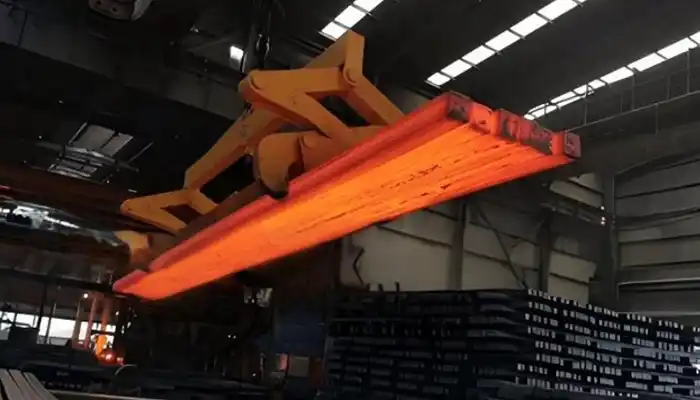
How Many Billets Can Be Lifted per Cycle?
menu_open
Content Quick Link
Key Takeaway
Understanding how many billets can be lifted in a single cycle is essential for planning efficient crane operations in steel mills and workshops. It’s not just about the crane’s lifting capacity; factors like billet size, weight, clamp design, and operational conditions all play a role. Knowing the right number prevents overloading, reduces wear on equipment, and improves overall productivity.
Key Questions Solved Here:
- How does billet size and weight affect the number of billets lifted?
- How does clamp type limit or enhance the lift capacity?
- How should crane capacity and safety margins be considered?
- What practical steps can buyers and operators take to optimize each lift?
Factors Affecting Number of Billets per Cycle
When planning how many billets can be lifted per cycle, several practical factors come into play. These aren’t just theoretical numbers—these are the realities steel mill operators deal with every day. Getting this wrong can lead to safety risks, reduced efficiency, or even equipment damage.
Billet Size and Weight
Billet dimensions and weight directly affect how many can be lifted at once. In practice, you can’t just look at the crane’s capacity and assume it works.
- Dimensions: Billets usually range from 100×100 mm to 180×180 mm in cross-section, with lengths from 4 to 12 meters. Longer or thicker billets take more space in the clamp and weigh more.
- Weight: Each billet can weigh anywhere from 0.5 tons up to 2 tons or more. The heavier the billet, the fewer you can lift safely in one cycle.
- Temperature considerations: Hot billets, fresh out of the mill, can be trickier. Thermal expansion and surface heat may require smaller batches for safe handling.
- Cold billets: If the billets are cooled or stored, you can often lift more in a single cycle, provided your clamp and crane are up to the task.
Practical tip: Always measure the actual billet weight and check dimensions before calculating how many can go in one lift. Never rely on “typical” sizes alone; real billets can vary batch to batch.
Clamp Type and Design
The clamp isn’t just a hook—it determines what you can actually pick up safely. Different clamps have different capacities and jaw openings, which can change how many billets fit in one go.
- Mechanical vs. hydraulic: Mechanical clamps usually lift fewer billets than hydraulic clamps of the same size because of jaw opening limits.
- Jaw design: Multi-jaw clamps can increase the number per lift, but they require precise billet alignment to avoid slipping.
- Grip strength: Ensure the clamp can handle the total weight of all billets in a cycle, not just a single one.
Practical tip: Inspect your clamps regularly and confirm with the manufacturer about the recommended number of billets per lift. Don’t assume a clamp rated for X tons can automatically lift X divided by billet weight safely.
Crane Capacity and Safety
Even if the billets and clamp look fine, the crane has its own limits. You need to factor in not only the weight of the billets but also the clamp itself and dynamic stresses during lifting.
- Rated lifting capacity: Always include the clamp weight in total load calculations.
- Dynamic factors: Starting, stopping, and moving the load adds extra stress. Don’t ignore it.
- Safety margin: A practical safety margin of 20–30% below rated capacity is common in real operations.
Practical tip: For new crane setups or unusual loads, start with smaller lifts and gradually increase until you find the safe maximum. This prevents overloading rails and mechanical components.
Operational and Environmental Conditions
The surrounding environment and workflow also influence how many billets you can lift safely.
- Workshop space: Narrow aisles or low headroom may require fewer billets per lift for maneuvering safety.
- Floor and rail conditions: Uneven surfaces or worn rails can limit the number of billets lifted safely.
- Throughput requirements: If high throughput is needed, you may prefer multiple smaller lifts rather than risking a large single lift.
Practical tip: Don’t just focus on the crane and clamp—look at the whole workshop environment. Sometimes reducing the load slightly improves both speed and safety.
Practical Tips for Determining Cycle Loads
Figuring out how many billets to lift in a single cycle isn’t just about doing the math—it’s about applying practical experience to keep operations safe and efficient. Operators and buyers can follow a few simple steps to make sure each lift is handled correctly.
- Calculate Total Weight: Start by adding up the weight of all billets you plan to lift and include the weight of the clamp itself. Then, compare this total with the crane’s rated lifting capacity, factoring in a safety margin of 20–30%. This ensures the crane isn’t overloaded, even during starts, stops, or travel.
- Check Arrangement: Make sure the billets fit securely in the clamp. Avoid overhang or uneven stacking, as this can cause the load to slip or swing dangerously during lifting. Proper alignment is particularly important for multi-jaw clamps.
- Test the First Lift: Whenever you’re using a new clamp or lifting unusual billet sizes, start with fewer billets than your calculation suggests. Observing how the clamp and crane respond helps prevent accidents and identifies any unexpected issues early.
- Adjust for Environmental Conditions: Consider factors like hot billets, narrow workshops, uneven floors, or rail conditions. These can all reduce the safe number of billets per lift. In some cases, smaller loads may actually speed up operations by reducing handling risks.
Practical Tip: Keep a checklist for each type of billet and clamp combination. This becomes a handy reference for operators and ensures consistent, safe lifting practices across shifts.
Conclusion
Figuring out how many billets to lift per cycle isn’t just about crunching numbers—it’s about understanding your equipment and the environment you’re working in. Every factor counts: billet size and weight, clamp design, crane capacity, and real-world conditions like workshop space or floor level.
By taking all of these into account, steel mill operators and buyers can make lifts that are safe, reliable, and efficient. Start with careful calculations, test your first lifts in practice, and always include a safety margin. This approach doesn’t just prevent accidents—it also reduces wear on your crane and clamps, keeps operations running smoothly, and protects your team.
Key Takeaways:
- Always consider the total weight, including the clamp and billets, before each lift.
- Check billet arrangement and clamp alignment to prevent slips or imbalance.
- Factor in environmental and operational conditions like hot billets or narrow workshops.
- Start with smaller test lifts for new equipment or unusual loads.
- Maintain a safety margin of at least 20–30% below rated crane capacity.

Article by Bella ,who has been in the hoist and crane field since 2016. Bella provides overhead crane & gantry crane consultation services for clients who need a customized overhead travelling crane solution.Contact her to get free consultation.